How I Teach…

Effective examples in the digital age

Picking apart and reworking my lessons from last year, I noticed that I almost exclusively model worked examples by handwriting “live” rather than pre-typing. I don’t recall making a conscious decision to do this, but following a discussion with my husband this weekend about print vs digital media, I thought I’d think more critically whether …

Effective examples in the digital age Read More »

LOTW – Making graphical and algebraic links with simultaneous equations

I’ve been super-lucky this year to get a top-set Year 10 group on my timetable – I’m feeling dead happy about this because: I taught them in Year 7, and they’re a great group – very enthusiastic about maths, a bright bunch and some fantastic personalities; I haven’t ever taught a top set at GCSE (because I …

LOTW – Making graphical and algebraic links with simultaneous equations Read More »

Teaching rounding

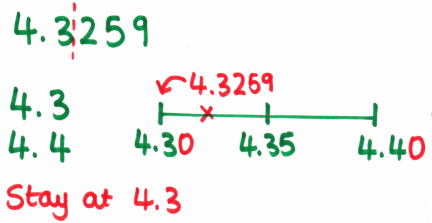
1. Crack place value firstThis might seem like a no-brainer, but teaching rounding on top of an insecure understanding of place value is a recipe for disaster. Before pupils can get their heads around rounding, particularly to a given number of decimal places, they need to understand why 0.43 is bigger than 0.413, otherwise the …

Teaching rounding Read More »

From bar modelling to ratio tables – tidying up percentages

It’s no secret that I’m a big fan of bar modelling to get pupils to really think about the calculations they are doing. It’s a great way to introduce work with percentages too, and solidifies the link between percentage and fraction calculations. One particular advantage is the flexibility it affords – I had one pupil …

From bar modelling to ratio tables – tidying up percentages Read More »